
In the face of potential recession and inflationary pressures, the luxury goods market stands out from its peers. This resilience can largely be attributed to strong pent-up demand following pandemic lockdowns, coupled with the spending power of high-end consumers. One of the leaders of the space is Global Blue Group, a tax-free shopping-focused company that had a turbulent introduction to public markets in 2020, through a SPAC deal, amidst the pandemic.
The company experienced a significant sales drop and accrued losses during this period. However, the recent uptick in international travel and a surge in consumer demand could signal a turnaround. Over the past two years, Global Blue Group has implemented several cost-cutting measures and streamlined operations during the pandemic, strengthening its position to rebound to pre-pandemic performance levels. So can Global Blue leverage the current demand surge to outperform the market, even in a possible recession?
High Stakes, High Rewards
The appeal of economies like Europe and the UK as luxury shopping destinations is in no small part due to policies such as tax-free shopping, which draw millions of tourists annually. However, facilitating a seamless, large-scale tax refund process for these shoppers poses a significant challenge. Founded four decades ago, Global Blue initially focused on helping international visitors in Switzerland reclaim their taxes paid on local purchases.
Fast forward to today, it has evolved into the industry leader in tax-free shopping solutions. The company’s operations span 50 countries and employ close to 2,000 people, providing services to over 13 million shoppers across 300,000 businesses worldwide. Dominating the market, Global Blue holds a remarkable 70% market share, tripling that of its closest competitor.

The company’s business segments aren’t limited to VAT refunds; it also provides integrated payment solutions for stores and dynamic currency conversion for in-store purchases and refunds. While Global Blue has seen significant growth in the past few decades, it has faced significant hurdles in the past few years. Its business suffered significantly during the pandemic, mainly due to travel restrictions placed on international shoppers, notably from China.
Investors had to make several concessions to get the green light for the company to go public, including relinquishing a €154 million dividend, converting €50 million of convertible preferred stock to common stock, and agreeing to reserve 18 months of proceeds that could be drawn on in the form of $75 million in convertible debt. Despite these initial struggles, conditions have improved significantly two years post-SPAC deal, both for Global Blue’s core operations and the overall macro operating environment.
Want to Find the Best Luxury Stocks? Try Benzinga
(Offer Expires 07-05-2023)
I use tons of trading software to help me better understand the market and make smarter trading decisions. One thing I love about Benzinga Pro is its versatility. It wasn’t built for just one type of trader but for a wide range of experienced investors like myself. I can create custom watchlists, and then quickly monitor the performance of my investments.
Some great news – Benzinga is giving all subspac readers a free two week trial!
Back in Vogue
Certain regions, excluding China and Russia, have already observed significant improvement in international shopping, with contribution volumes doubling or, in some cases, nearing triple compared to pre-pandemic levels. As we approach summer 2023, Chinese shoppers, driven by Millennials and Gen Z buyers, are expected to significantly bolster sales.
The likelihood of Chinese international shoppers traveling and shopping this year is threefold compared to the same time last year. When Chinese travelers return to pre-pandemic levels, given the pent-up demand from years of stringent Covid lockdowns, Global Blue can expect significantly increased collections and revenue. This is bolstered by the fact that regions like Europe and the US have witnessed an increase in transaction volume and an average increase of 30% in spend per shopper.

Beyond this, other favorable growth drivers for Global Blue include the expanding middle class in emerging markets, who are aspirational tax-free buyers. Coupled with the fact that tax-free luxury goods sales in countries with VAT refunds have grown 1.4x compared to non-VAT refund countries, it’s evident that demand remains robust. However, the market isn’t without challenges. Forecasts suggest a mix of recessionary and inflationary pressures could significantly impact international shoppers and luxury travel.
Yet, the luxury segment remains strong. Despite inflation nearing 10% in the Euro area, luxury brands have managed to maintain their margins by passing on price increases to customers. Historical data from past recessions, like the great financial crisis, show that while the luxury goods market might see an 8% reduction, the tax-free shopping segment remains largely resilient. This resilience may help Global Blue weather potential economic storms.
Financials and Valuation
In the nine months ending in 2022, Global Blue reported revenues of €224.7 million, marking a significant 258% increase from the same period in 2021. However, it still falls short of the pre-pandemic revenue levels of €337.5 million. Concurrently, the EBITDA has been weighed down by persisting operating costs, recorded at €64.5 million, which is just 39% of the pre-pandemic levels of €144.7 million seen in FY 19/20. This EBITDA reduction is a consequence of higher fixed costs and escalating financing costs due to rising interest rates.
Despite these challenges, Global Blue forecasts an improvement in EBITDA margins from the current 28.7% to nearly 46% upon full revenue recovery and the return of Chinese international shoppers to pre-pandemic levels. Moreover, the company has implemented a cost-saving program, achieving a 21% reduction compared to 2019, and has also managed to lower its debt. In a recent development, Global Blue fortified its cash reserves to €233 million through investments from Certares & Knighthead.
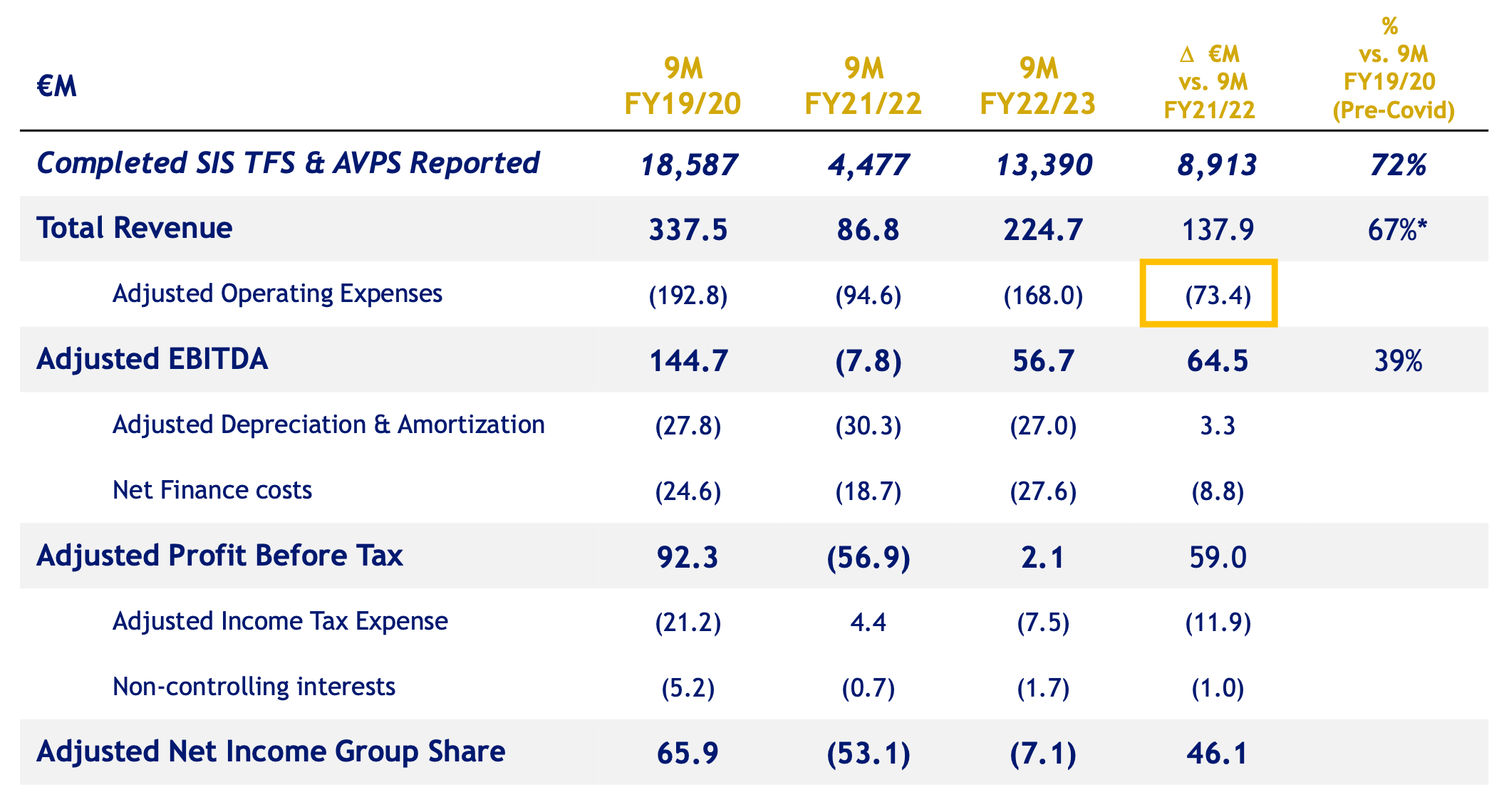
With the anticipated recovery in global international shopping into the summer of 2023, paired with the company’s reduced debt and cost-saving measures, higher profit margins are expected shortly. Presently, Global Blue trades at roughly $4.65 per share, resulting in a market cap of $883 million.
This translates into a trailing price/sales ratio of 3.15x. Given the improved macroeconomic landscape since the company’s debut in 2020 and enhancements in its core operations, this valuation appears reasonable. Global Blue’s upcoming release of its Q4 and full-year 2022 results on June 28th, 2023, will provide further insight into the company’s recovery progress in the most recent quarter.
Bottom Line
Global Blue, with its substantial market lead and strategic cost-cutting measures, appears well-placed to capitalize on the revival of international shopping and pent-up consumer demand. Moreover, emerging trends like the growth of the middle class in developing economies and increased e-commerce across offer promising growth opportunities. While inflation and recessionary headwinds could pose challenges in the near term, past trends indicate the potential resilience of tax-free shopping. If the company can continue to grow its revenues following the recovery in demand while also streamlining its operations, it could deliver significant value to shareholders.
Source: The Art of Resilience