
Happy Sunday Friends!
As the EV market continues to expand, challenges related to space optimization and weight management are becoming increasingly critical. The integration of heavy components like batteries in EVs necessitates a rethinking of vehicle design to strike the right balance between range, performance, and features. This is further compounded in the case of SUVs and other larger vehicles, which are gradually becoming heavier, raising concerns among regulators and consumers, particularly those with range anxiety.
To address these challenges, Australia-based Carbon Revolution has created and popularised its carbon fiber wheels. These wheels offer a lightweight and robust solution, potentially revolutionizing vehicle design efficiency. As the automotive market continues to evolve rapidly, can Carbon Revolution seize this opportunity to scale its partnerships and fully capitalize on the favorable tailwinds?
Redefining the Wheel
As the automotive industry transitions to an EV-centric one, the quest for increased range has been a central focus for Original Equipment Manufacturers (OEMs). Achieving significant weight reductions in vehicles to enhance range is a complex task, often requiring a multitude of minor modifications or the elimination of major features.
Conventional vehicles use large aluminum vehicles, which when combined with the heavy batteries installed in EVs, can prove to be impractical due to the structural design of modern-day vehicles. Founded in 2007, Carbon Revolution focuses on solving these challenges. The company, which is a Tier 1 OEM supplier, specializes in producing lightweight carbon fiber wheels.
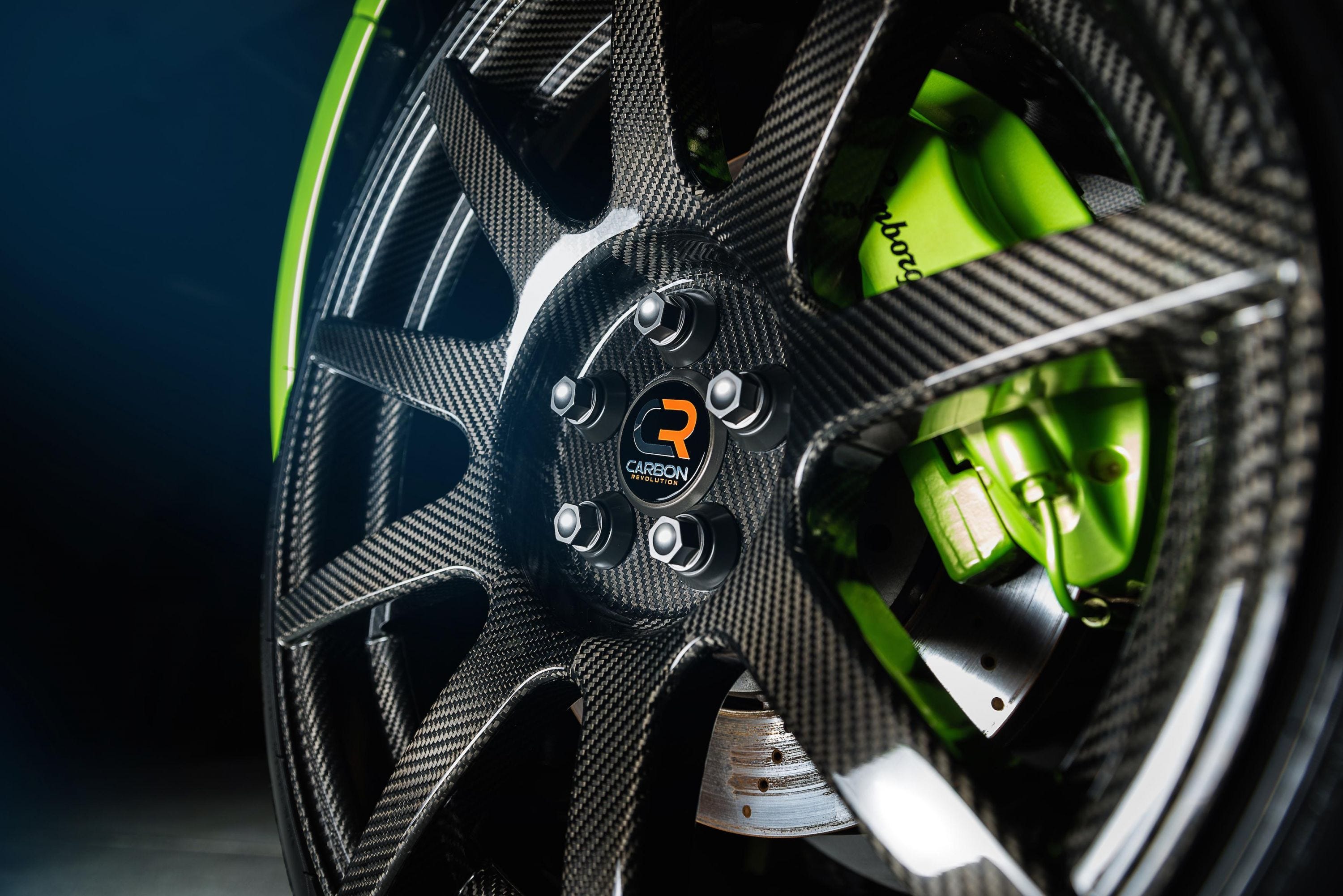
Compared to traditional vehicles, Carbon Revolution’s wheels weigh 40% to 50% less, increasing the vehicle range between 5% and 10%, while also reducing 100 pounds of weight from the vehicle in key areas. Other advantages include better vehicle handling and performance, reduced noise, vibration, harshness, and greater flexibility in aerodynamics, wheel sizing, and styling. The benefits are even more pronounced with larger wheel sizes, where heavy aluminum becomes untenable for meeting OEM performance goals, particularly in SUVs.
Additionally, carbon fiber wheels lead to reduced strain on the suspension system, enhanced traction, and improved driver control. All of this is protected by a robust portfolio of 82 patents across 14 patent families, along with advanced composite wheel process intellectual property. This creates significant barriers to entry for potential competitors, cementing the company’s position in the market.
Want to Find the Best De-SPACs? Try Benzinga
(Offer Expires 11-29-2023)
I use tons of trading software to help me better understand the market and make smarter trading decisions. One thing I love about Benzinga Pro is its versatility. It wasn’t built for just one type of trader but for a wide range of experienced investors like myself. I can create custom watchlists, and then quickly monitor the performance of my investments.
Some great news – Benzinga is giving all subspac readers a free two week trial!
Rolling in Revolution
Since its inception, Carbon Revolution has sold over 70,000 wheels, boasting clients such as Ford, General Motors, and Renault. The company initially targeted the performance and premium market segments, featuring in models like Ford’s GT and Shelby Mustang GT350R and GT500, various Ferrari models including the 488 Pista and F8 Tributo, Renault’s Megane RS Trophy R, and recently in GM’s Chevrolet Corvette Z06. More recently, Ford announced the integration of Carbon Revolution’s wheels in its 2024 Mustang Dark Horse.
Carbon Revolution is competing in the rapidly growing automotive wheel market, currently valued at $38 billion and projected to grow to $59 billion in the next five years. This growth is expected due to the expansion of EVs and increasing vehicle weight, driving regulatory and range concerns. In the past year alone, Carbon Revolution has been awarded five new programs, including two significant North American EV SUV projects, bringing their total to 18 programs across six OEMs since inception.
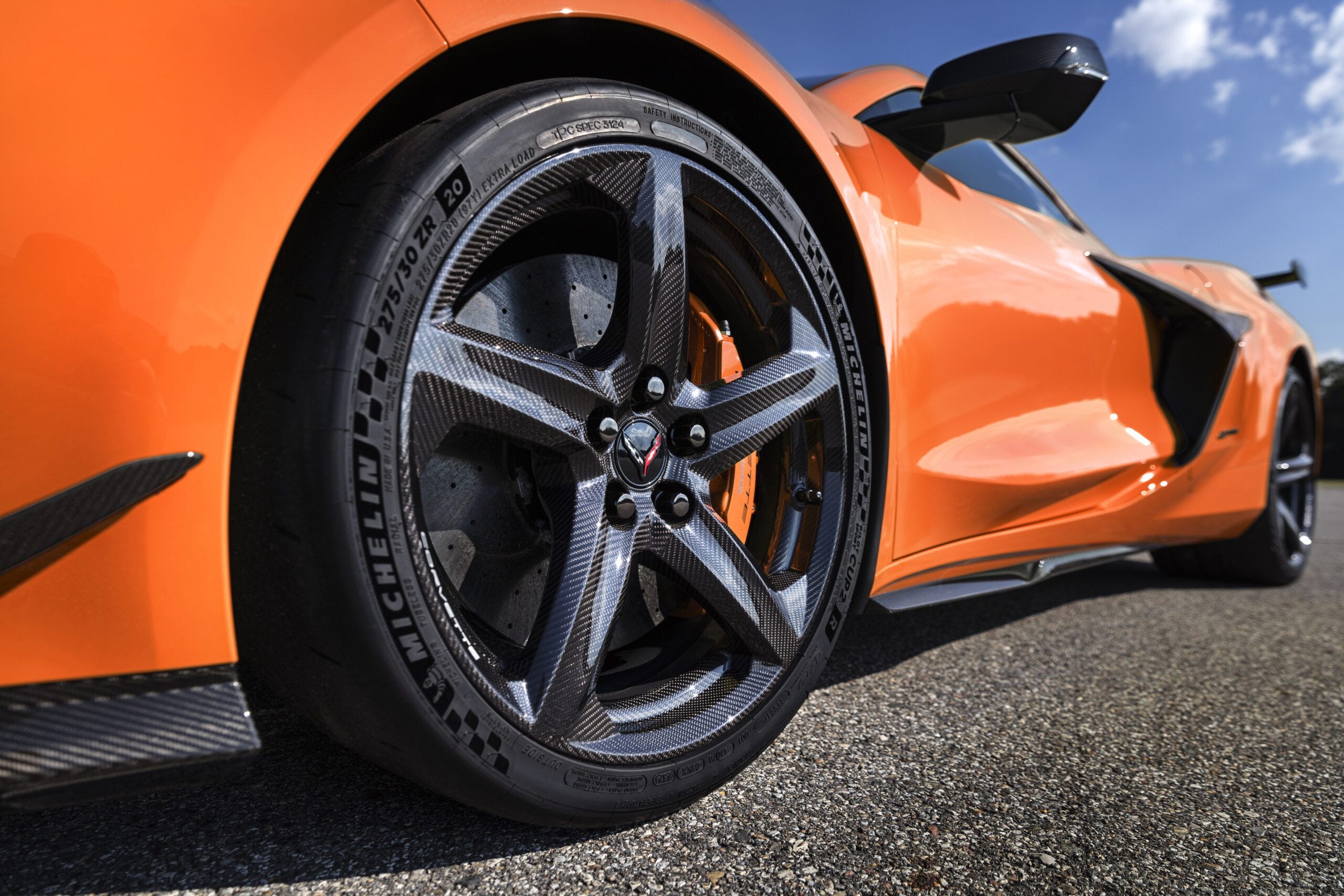
To meet this rising demand, Carbon Revolution has commissioned the first phase of the Mega Line, an automated production system using robots and conveyor systems. This line is expected to produce 70,000 wheels annually by December 2024, with plans to further expand capacity into 2025. As the company secures more and higher-volume programs, it anticipates improved margins through optimized input costs, including operational leverage, lean process improvements, labor efficiencies, and lower carbon fiber prices due to higher volume purchases and reuse strategies.
Looking ahead, Carbon Revolution wants to relocate production from Australia, to slash labor costs by up to 80%, reduce shipping costs by producing closer to its supply and customer base, and enhance operational efficiency. These initiatives, coupled with production scaling, are expected to boost contribution margins significantly, from the current 10% to a projected range of 50%-60%.
Financials and Valuation
Carbon Revolution anticipates that it will significantly boost its revenue, projecting to generate $40.6 million in 2023 and then nearly doubling that to $81.6 million in 2024, compared to the $28.5 million achieved in 2022.
This projected increase in anticipated revenue is based on awarded contracts signed with OEMs. Carbon Revolution aims to expand its contribution profits from $4 million in 2023 to a substantial $24 million by 2024, which should enable the company to reach operational quarterly profitability by the end of 2024.
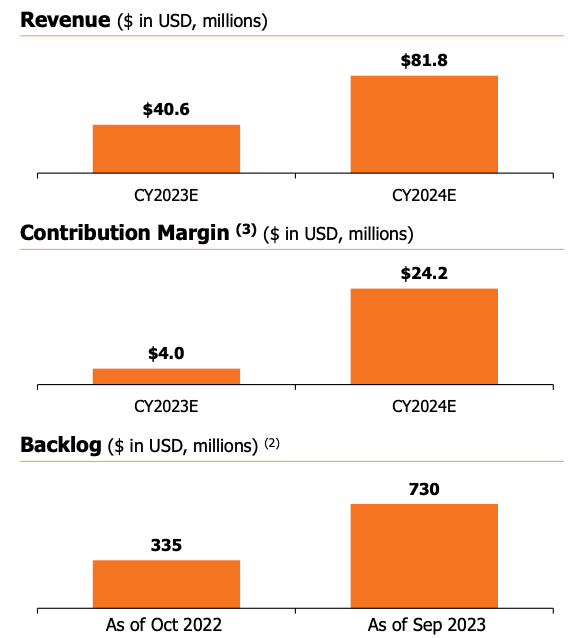
Furthermore, Carbon Revolution has also seen a significant increase in its current backlog, which has more than doubled from $335 million at the time the SPAC deal was announced to $730 million by September 2023.
The merger with SPAC Twin Ridge Capital values Carbon Revolution at $270 million, a considerable premium compared to its $55 million valuation post-IPO in Australia in 2019. While this represents a significant increase, the company’s rapid revenue scaling and march toward profitability suggest that this valuation could soon be justified.
Bottom Line
Carbon Fiber wheel manufacturer, Carbon Revolution, has effectively capitalised on market tailwinds to secure a significant share in the automotive wheel sector. The company has secured strategic partnerships with top-tier automakers, solidifying its position in the industry. As the company moves into 2024, Carbon Revolution continues to build momentum, by signing numerous partnerships, expanding its manufacturing capabilities, and improving its margins. The company’s valuation has swelled over the past five years along with its revenue growth and margins. If the company can continue to maintain its rapid pace of execution, its valuation and market position could be justified in the future.
Source: Spinning Success